Equipment range
Magnetic Separators
Magnetic separators for continuous tramp metal removal — overband, suspension, drum, pulley and eddy current units, manufactured in Faisalabad and sized to your belt width and burden depth.
- Products
- 13
- Industries
- 6
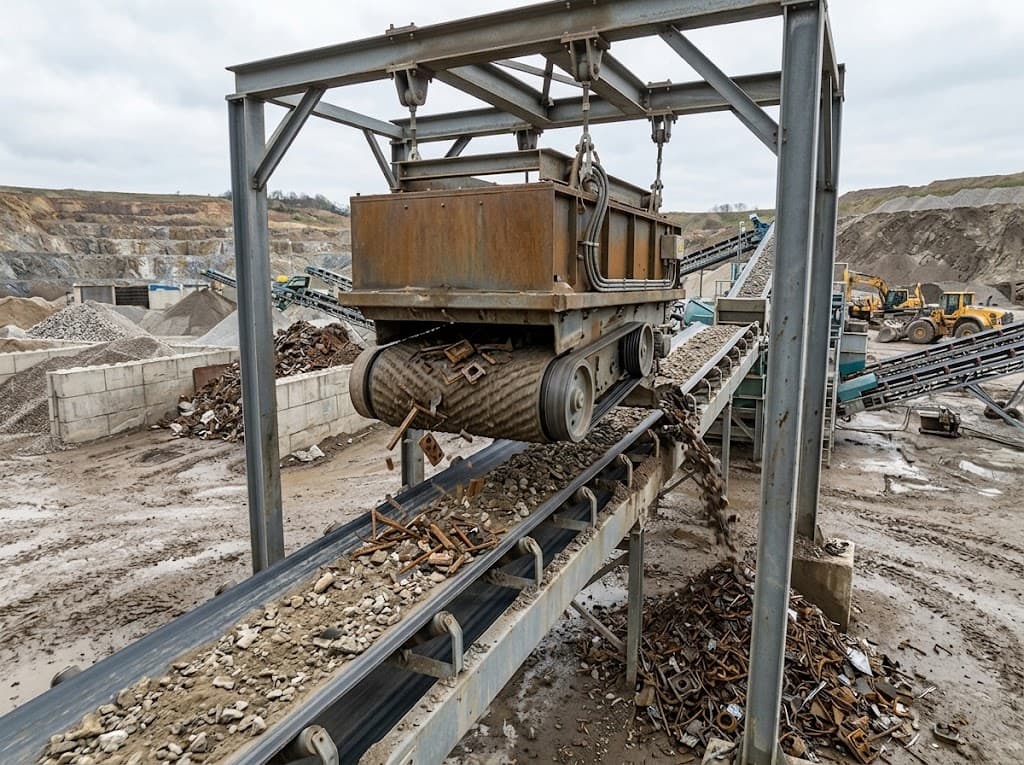
Overband Electro Magnet Separator
A suspended, powered magnet mounted crosswise or in-line over a conveyor that lifts and continuously discharges large ferrous tramp metal out of the material stream.
- Conveyor Belt Width Covered650–2000 mm
- Suspension Height150–600 mm above burden
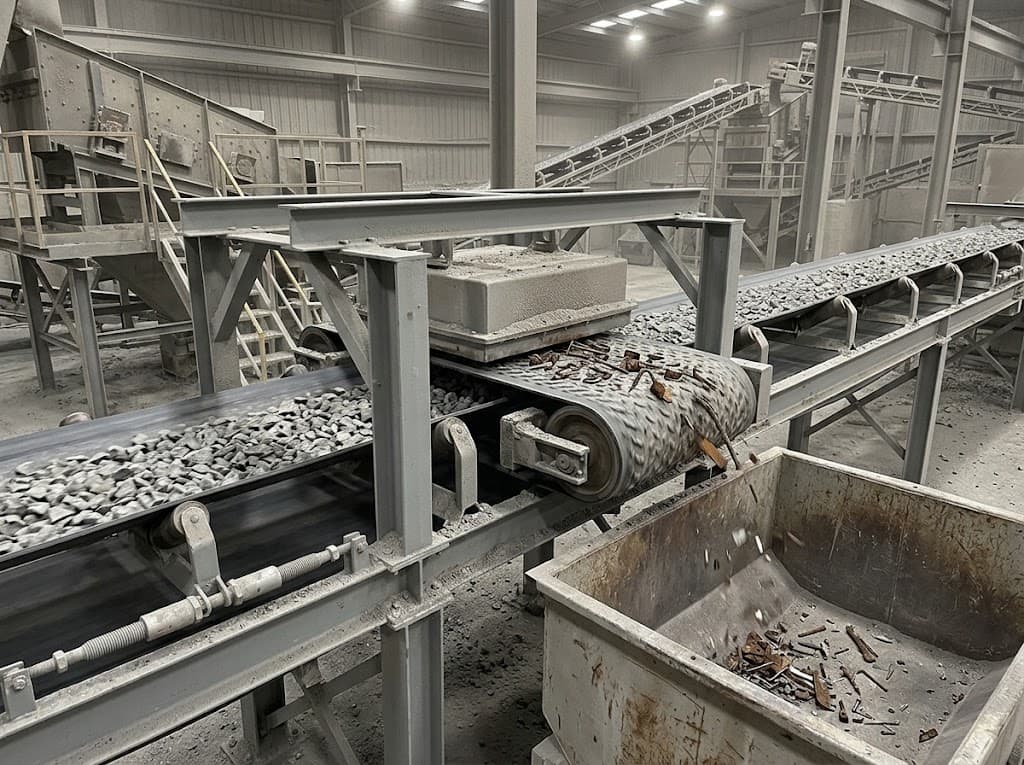
Overband Permanent Magnet Separator
A suspended permanent-magnet unit that lifts ferrous tramp metal off a conveyor without needing an electrical power connection.
- Conveyor Belt Width Covered650–2000 mm
- Suspension Height100–400 mm above burden
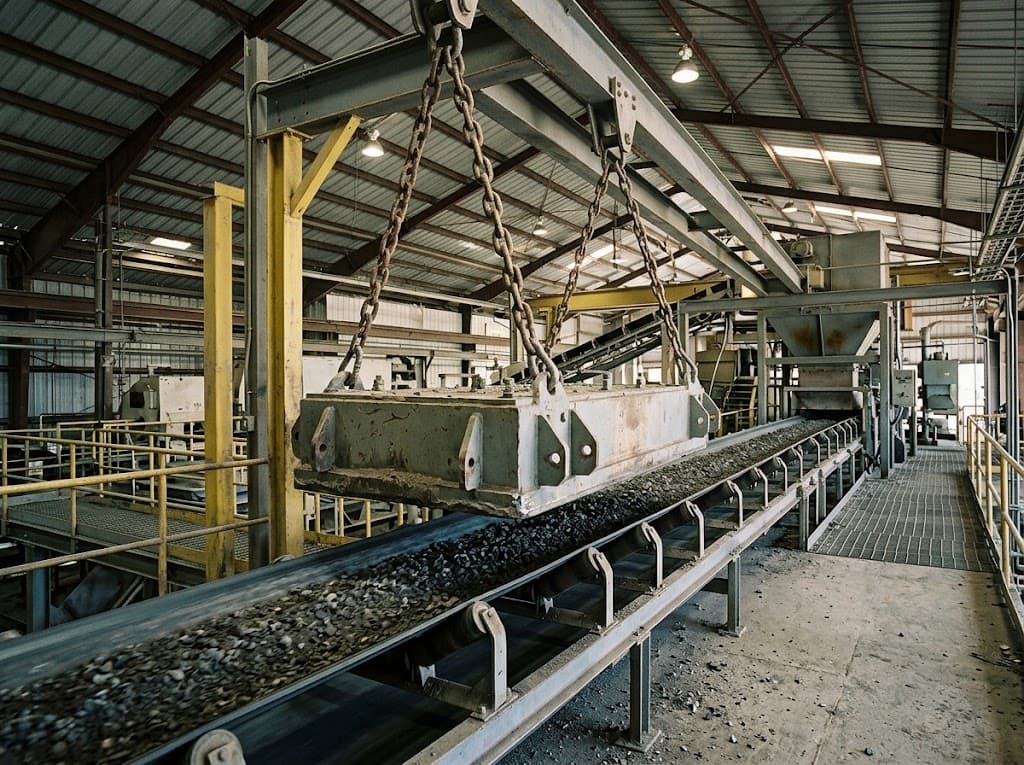
Permanent Suspension Magnet
A stationary, non-self-cleaning permanent magnet suspended over a conveyor or chute that collects tramp metal for manual or scheduled clean-out.
- Plate Width300–2000 mm
- Magnetic Field IntensityUp to 5000 Gauss
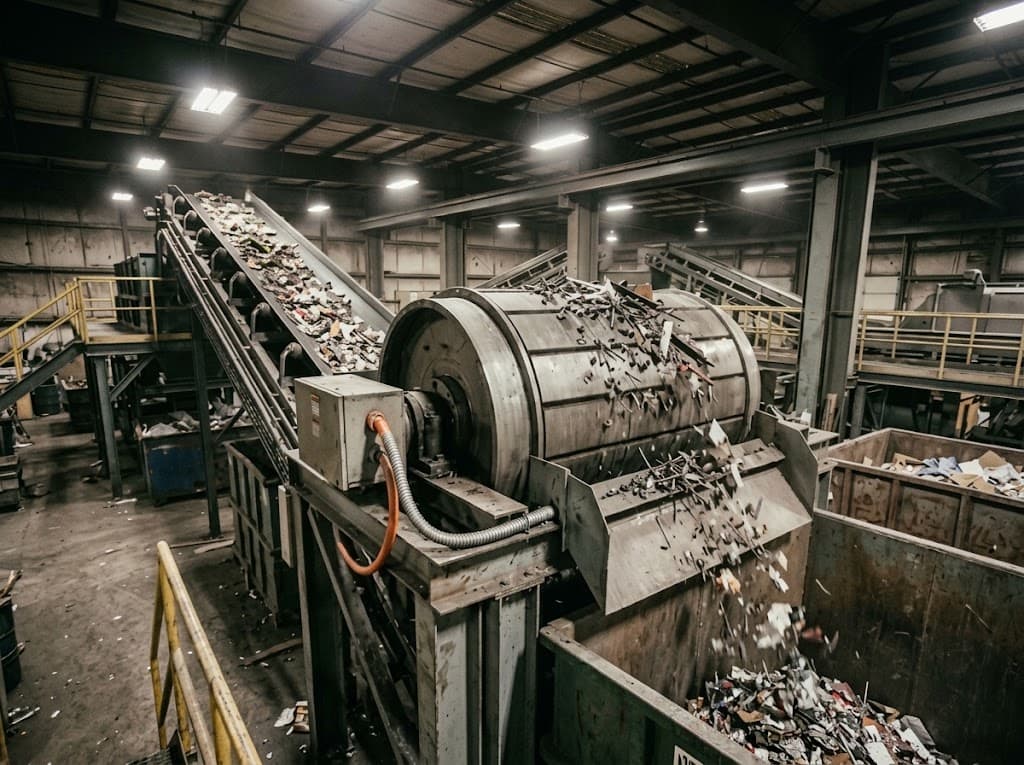
Electro Magnetic Drum Separator
An electrically-powered rotating drum that pulls tramp iron and ferrous fines out of bulk material on a conveyor, protecting downstream crushers and mills.
- Drum Diameter400–1200 mm
- Drum Face Width650–2000 mm
Dry Suspension Magnet
A suspended magnetic separator built specifically for dry, free-flowing powders and granules in gravity chutes and pneumatic lines, removing fine ferrous contamination before packaging or processing.
- Chute Opening Size100–800 mm
- Magnetic Field IntensityUp to 6000 Gauss
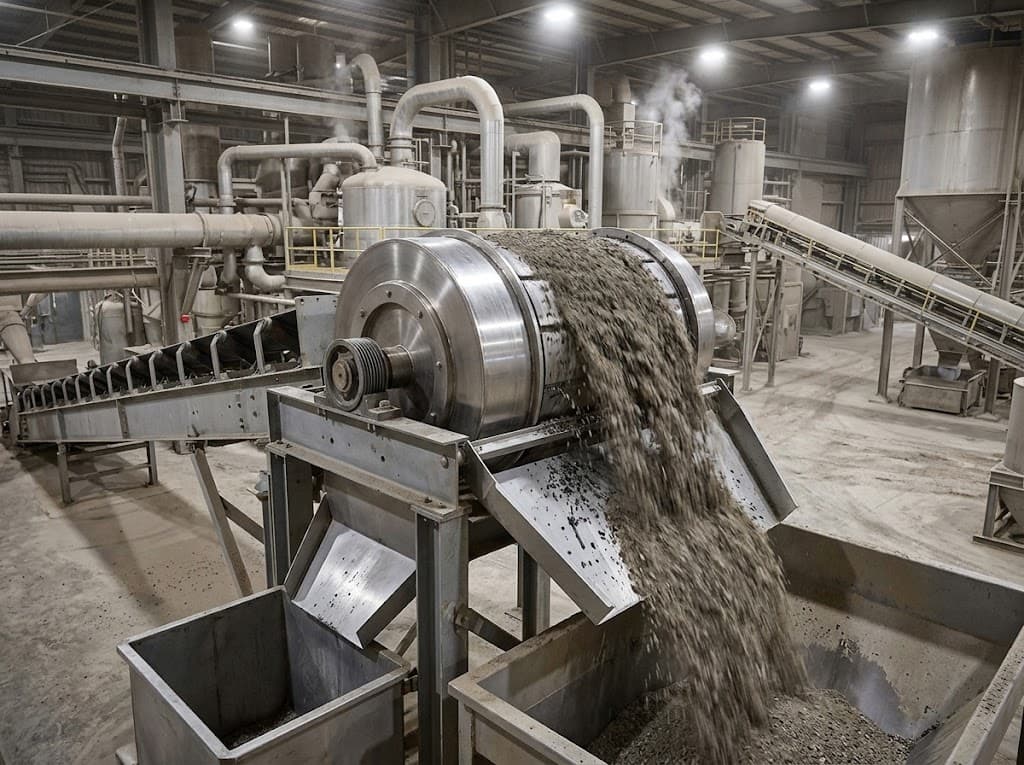
Permanent Magnetic Drum Separator
A rotating drum fitted with a fixed array of high-energy permanent magnets that removes ferrous contamination from bulk material without needing an electrical connection.
- Drum Diameter400–1000 mm
- Drum Face Width650–2000 mm
Electro Suspension Magnet
A stationary electromagnet suspended over a conveyor or chute, giving stronger and adjustable field strength than a permanent suspension magnet for manual or scheduled clean-out lines.
- Plate Width300–2000 mm
- Magnetic Field IntensityUp to 8000 Gauss
Lifting Magnet
A crane-mounted electromagnet used to lift, move, and load scrap steel, billets, plate, and other ferrous material without slings or chains.
- Lifting Capacity500 kg – 10,000 kg
- Plate Diameter400–1500 mm
Chute Magnetic Separator
A magnet assembly fitted directly inside a gravity feed chute to intercept tramp iron as material transfers between processing stages.
- Chute Width200–1200 mm
- Magnetic Field IntensityUp to 6000 Gauss
Drum Magnetic Separator
A rotating drum separator available in electro or permanent configurations, providing continuous ferrous removal at the head pulley of a conveyor.
- Drum Diameter400–1200 mm
- Drum Face Width650–2000 mm
Eddy Current Separator
A high-speed rotor separator that ejects non-ferrous metals such as aluminium and copper from mixed waste, recycling, and recovery lines.
- Belt Width650–1400 mm
- Rotor SpeedUp to 3000 RPM
Metal Separator (Metal Detector)
An in-line metal detection unit that senses ferrous, non-ferrous, and stainless steel contamination in product flow and triggers automatic rejection.
- Aperture Size100–600 mm
- Detection SensitivityFerrous / Non-ferrous / Stainless
Magnetic Pulley
A magnetised conveyor head pulley that separates ferrous tramp metal from material as it discharges, without needing a separate drum unit.
- Pulley Diameter300–800 mm
- Pulley Face Width500–1800 mm
What is a magnetic separator?
A magnetic separator is a machine that pulls ferrous metal out of a moving stream of material. The metal is usually tramp iron: bolts, reinforcing bar, liner plates, bucket teeth and lost tools. The separator is fitted on or around a conveyor, chute or pipeline so the iron is removed before it reaches a crusher, a mill, a shredder or the finished product.
In a sugar mill that means protecting the cane knives and fibrizer. In a cement plant it protects the crusher and the vertical mill. On a recycling line it is how steel is recovered for sale.
Types of magnetic separators we manufacture
Overband magnetic separators
An overband magnetic separator hangs above the conveyor, either across the belt or in line over the head pulley. A cleaning belt runs around the magnet and throws the captured iron clear, so the conveyor never stops for cleaning. We build it as an overband electro magnet separator, with a field of up to 9000 Gauss for deep burdens and heavy tramp iron, and as an overband permanent magnet separator, which needs no power for the magnet. Both cover belt widths from 650 to 2000 mm.
Suspension magnets
A suspension magnet works on the same principle without the cleaning belt. It is a stationary magnet hung over a conveyor or chute and cleaned by hand at intervals, which suits a line where tramp iron is occasional rather than constant. The range is the permanent suspension magnet, the electro suspension magnet for a stronger, adjustable field, and the dry suspension magnet for powders and granules.
Magnetic drum separators
A magnetic drum separator is a rotating shell around a fixed magnet. Material is fed onto the drum, the non-magnetic fraction falls straight off, and the iron is carried round and released behind a divider. Separation is continuous and the drum cleans itself. We manufacture the electro magnetic drum separator, the permanent magnetic drum separator and a drum magnetic separator supplied in either form, in drum diameters from 400 to 1200 mm.
Magnetic pulleys and chute separators
A magnetic pulley replaces the head pulley of the conveyor, so iron is held to the belt and dropped behind the discharge point with no separate unit to install. A chute magnetic separator is fitted inside a gravity chute and catches iron at the transfer point between two stages.
Eddy current separators, metal detectors and lifting magnets
A magnet cannot hold aluminium or copper. An eddy current separator throws those non-ferrous metals out of the stream with a high-speed magnetic rotor. A metal separator (metal detector) senses ferrous, non-ferrous and stainless steel and rejects it automatically. A lifting magnet is the crane-mounted electromagnet used to move scrap, billets and plate.
How to choose a magnetic separator
Five things decide which magnetic separator fits a line:
- Belt width. The magnet has to cover the full width of the material, not only the middle of the belt.
- Burden depth. Iron buried at the bottom of a deep bed needs a stronger field than iron lying on top. This sets the suspension height and the field strength.
- Size of the tramp iron. A fine nail and a length of rebar need different magnet designs.
- How much iron arrives. Occasional tramp iron suits a manually cleaned suspension magnet. Constant iron needs a self-cleaning overband or a drum.
- The material itself. Belt speed, moisture, temperature and whether the product is a dry powder or a coarse rock all change the choice.
Electro or permanent magnetic separator?
An electro magnetic separator uses a powered coil. It reaches a higher field, works at a greater suspension height, and can be switched off to drop the iron. It needs a power supply and a control panel.
A permanent magnetic separator uses ferrite or neodymium magnets. It needs no power for the magnet, cannot fail in a power cut and costs nothing to run, but its field is fixed and its reach is shorter. As a rule, a shallow burden on a narrow belt suits a permanent magnet, and a deep burden or heavy tramp iron suits an electro magnet.
Magnetic separator price in Pakistan
There is no single list price for a magnetic separator. The price depends on the belt width, the field strength, whether the magnet is electro or permanent, and whether the unit is self-cleaning. Send us the belt width, the material and the burden depth, and we will return an indicative specification and price as soon as possible. Request a quote.